


China celebrates Qixi a festival 2,500 years old. Dior, Burberry, Prada and Chaumet already have their campaigns ready. And they’re smarter than ever.
There is a 2,500-year-old Chinese legend about two lovers Zhinu, a weaver goddess, and Niulang, a cowherd separated by the Milky Way and reunited just once a year, on the seventh day of the seventh month of the Chinese lunar calendar. That night, a bridge of magpies forms in the sky and allows the two to meet for a few hours.
The story is beautiful. But in 2026, on 19 August, the luxury industry is far more interested in what happens on earth than in the sky. Qixi nicknamed Chinese Valentine’s Day has become one of the most important commercial moments in the global fashion calendar, with brands investing tens of millions in campaigns dedicated exclusively to this date.

What Qixi is and why it matters for luxury.
Qixi is not a Valentine’s Day translated into Chinese. It’s a festival with its own cultural identity about longing, distance, reunion and craftsmanship. Tradition holds that young women would practise their sewing and embroidery skills during this period, which connects the festival deeply to artisanship and creativity exactly the values Western luxury sells.
For the luxury industry, Qixi is one of the most profitable windows of the year. Pop-ups, limited-edition gift boxes, couple vouchers, product launches and interactive photo installations are common during the Qixi season. Brands such as Dior, Gucci, Prada, Louis Vuitton, Burberry and Chaumet launch dedicated collections months before the festival.
What changed in 2026 campaigns become more sophisticated.
If in previous years the formula was simple famous Chinese ambassador + pink product + romantic message in 2026 Qixi campaigns have evolved significantly. As brands face cooling market sentiments and newfound interest in “small luxuries” in China, Qixi 2026 sees more brands opting for nuanced expressions of connection using the language of film, local cultural references and the daily rituals of love.
The shift is strategic, not aesthetic. The young Chinese consumer of 2026 is more selective, less impressed by grand campaigns and more interested in authenticity and cultural relevance. Brands have understood the message.
The Qixi 2026 campaigns who did it well.
Dior – launched a series featuring both brand ambassadors Deng Wei and Wang Churan, with an expansive collection showcased through a four-city pop-up series at major luxury shopping malls. The Dior Heart motif runs through the entire collection from dresses to Mitzah scarves. The first luxury house to launch a Qixi campaign, more than a decade ago.

Burberry – the campaign “Love, on Repeat” finds romance in a record store, where brand ambassadors Zhang Jingyi and Zhang Kangle meet over a shared love of music. The story puts everyday chemistry at its narrative core not grand love, but small moments. A deliberate choice for a consumer saturated by romantic hyperbole.

Prada – joined forces with two contemporary Chinese cultural icons the recently named brand ambassadors Transform Project and Chinese actress Zhang Yifan, in a campaign filmed at the Chapel of Music in Aranya, a resort town in Hebei Province. The concept is subtle: the two never physically share the same scene, yet are constantly within each other’s field of vision. A metaphor for Chinese fan culture distance and connection simultaneously.
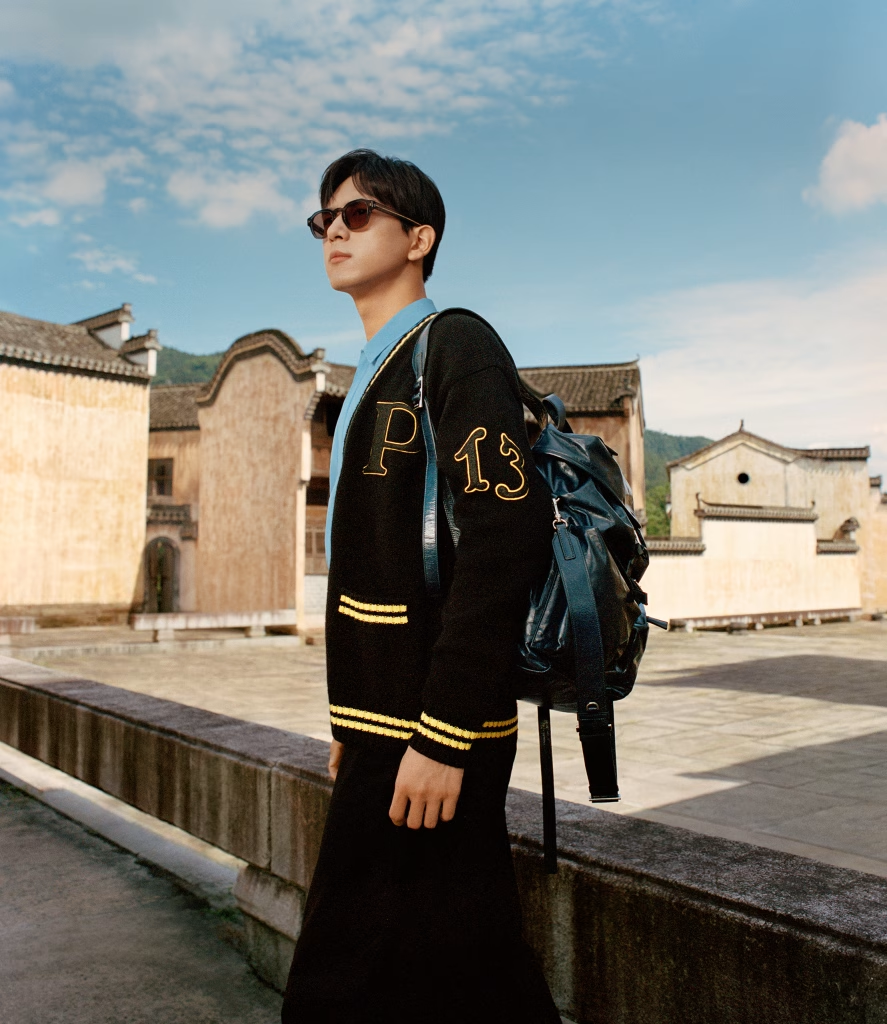
Chaumet – “We Crown Each Other” turns a familiar proposal scene on its head. On a riverside staircase, Wen Qi and her partner play rock-paper-scissors while each secretly carries a ring box. When he prepares to kneel, she steps down to meet him, revealing her own proposal. Equality. Choice. Exactly what the young Chinese female consumer wants to see.

Miu Miu – grabbed the moment with a campaign that focused on the moments leading up to the festival itself. Photographed by Fan Xin, brand ambassadors Zhao Jinmai and Lexie Liu appear surrounded by vibrant floral scenes, the ads centered on the rituals of giving and receiving flowers. Bouquets are assembled, deliveries are organised, flowers await their recipients the anticipation before the day, not the day itself.

Why this evolution matters beyond China.
Broadening the meaning of love beyond “man gives woman a gift” means brand messages appeal to a broader audience. Single consumers, women buying for themselves, and couples who want a more credible expression of intimacy are all included. Qixi 2026 is no longer about Valentine’s Day gifts. It’s about redefining what luxury means as an emotional experience.
And the brands that have understood this receive something more valuable than 19 August sales: long-term cultural relevance in a market that until recently had turned its back on them.
Zhinu and Niulang are reunited once a year. Luxury brands and the Chinese consumer are trying to rebuild a relationship they damaged with far greater complexity. For now, the campaigns look good.


