


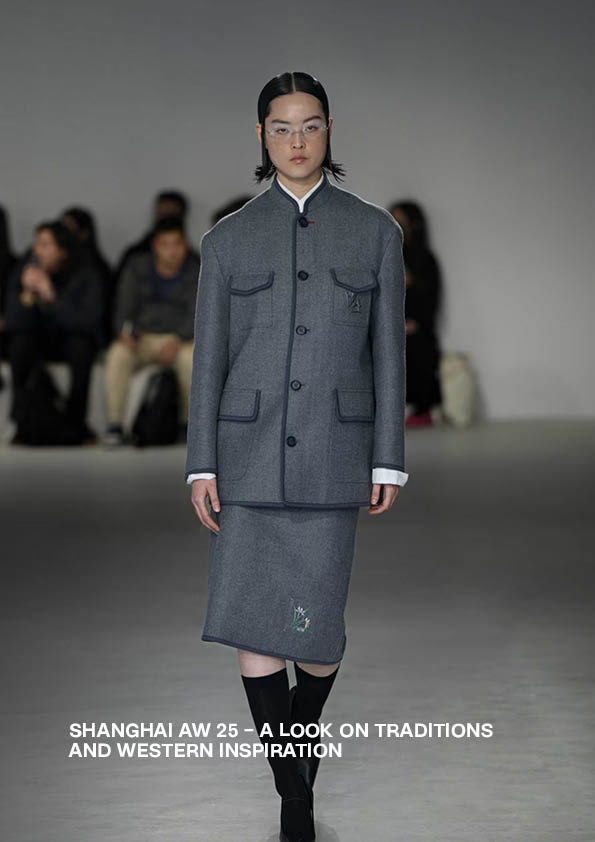
This fall-winter season, Chinese fashion unfolded as a dynamic interplay between heritage and modernity, where traditional craftsmanship coexisted with Occidental influences and emergent stylistic tendencies. Some collections gravitated toward a purist celebration of artisanal skill, while others embraced a hybridized aesthetic, fusing elements of pop culture and Western iconography into their designs.
MARKGONG – Reanimating the IT Girls of the 2000s
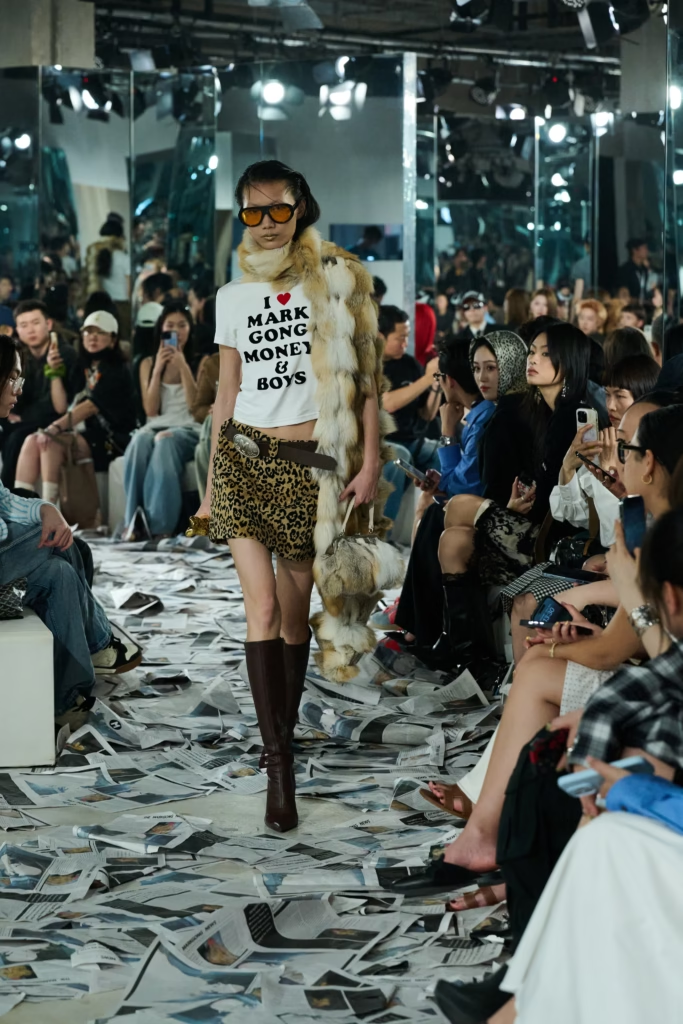
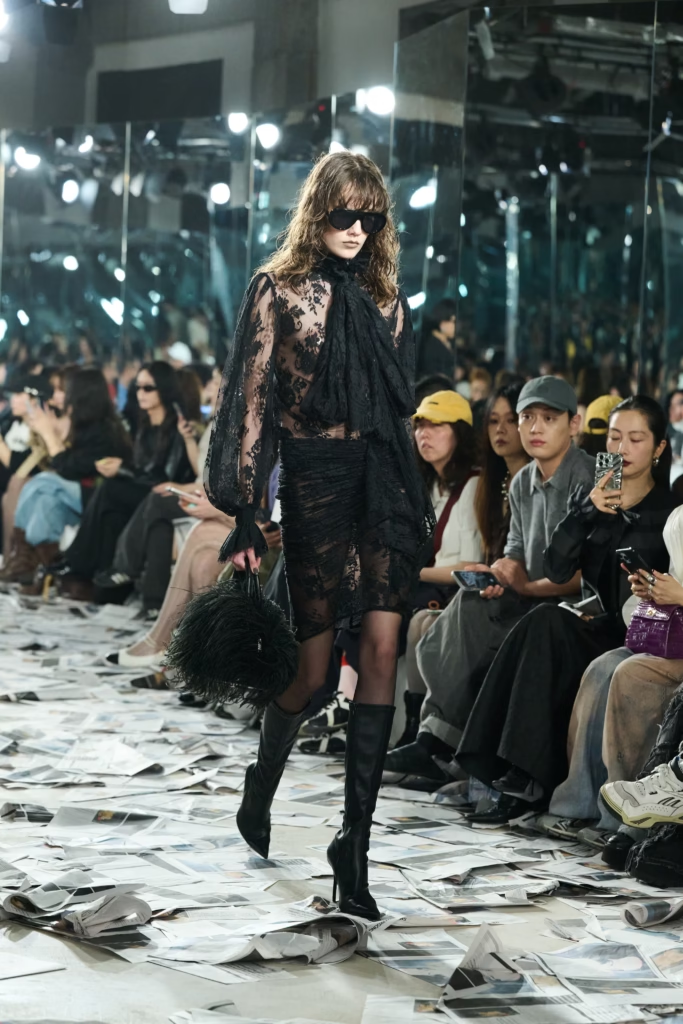
Mark Gong’s latest collection paid homage to the “Gong girls”—a reference to the IT girls of the early 2000s, such as Paris Hilton, Lindsay Lohan, and Kim Kardashian—while integrating contemporary fashion codes. The sheerness of body-hugging dresses, reminiscent of Saint Laurent’s aesthetic, was paired with black sunglasses, high leather boots, and feathered bags, nodding to today’s icons like Kate Moss and Charlotte Gainsbourg, who have redefined power dressing through the lens of sensual minimalism.
Fur played a decisive role in establishing status, appearing as oversized hats, dramatic collars, stoles, capes, and even shoes. The runway setting—strewn with newspaper pages and bordered by mirrored walls—heightened the paparazzi-driven spectacle, reinforcing the celebrity culture narrative. Meanwhile, leopard-print coats, inflated Minnie Mouse-esque shoes, leather and velvet corsets, fringed skirts, and Y2K-inscribed T-shirts echoed Dsquared2’s unabashed sensuality but were executed with a more refined precision. Despite its referential nature, the collection successfully projected a luxurious, globally resonant aesthetic without veering into pastiche.
“We [dressed] good celebrities early on, so this season we thought of looking into the It-girls that really influenced many of us,” said Gong.
Samuel Gui Yang – In Love with Patti Smith and Krzysztof Kieslowski
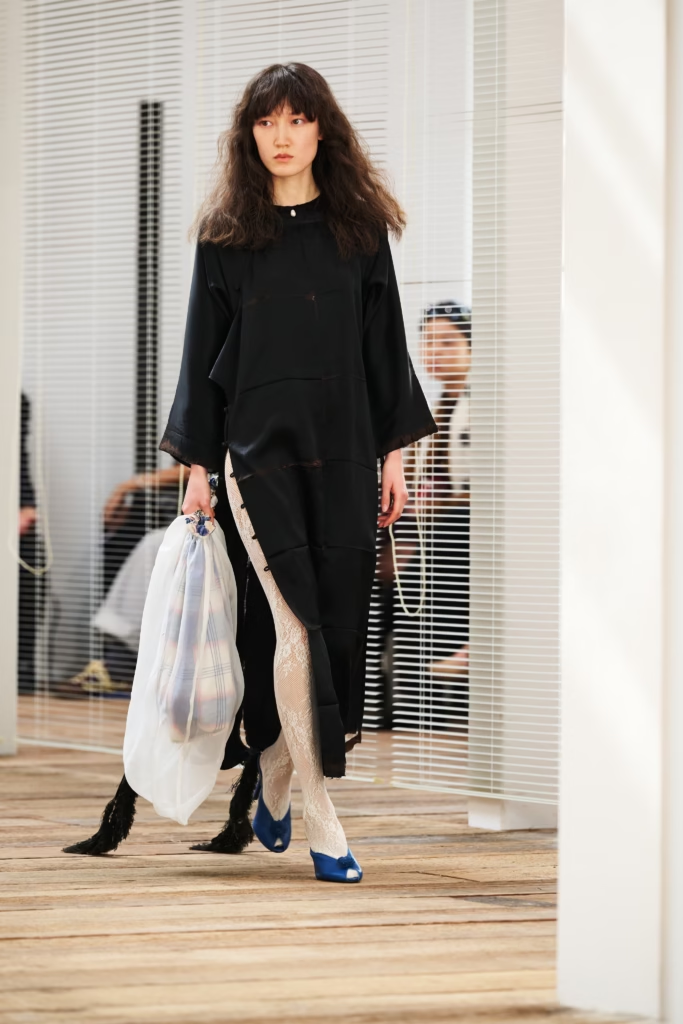
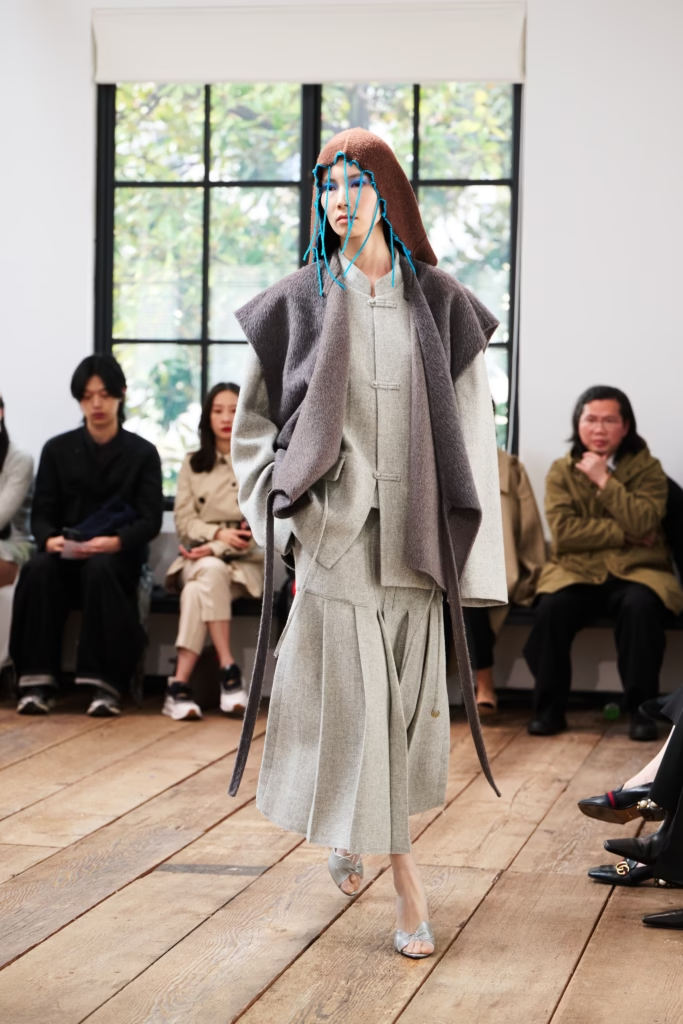
Samuel Yang and Erik Litzén explored the concept of the “frame”—both literally and metaphorically—as a space that defines individual existence. Their inspirations spanned Shanghai-based writer Eileen Chang and the politically influential Soong sisters, as well as Western cultural figures like Patti Smith and Krzysztof Kieslowski’s film A Short Film About Love. Set against the backdrop of expansive windows, the show deliberately referenced the voyeuristic premise of the film, in which a boy obsessively watches a woman through a window.
This concept seamlessly translated into the garments, where a dialogue between Eastern and Western aesthetics unfolded. Traditional Chinese silhouettes—Mandarin collars, qipaos, and intricate button closures—were subtly reimagined within a broader fashion context, intersecting with elements like peep-toe pumps with socks, bias-cut slip dresses, and fringe detailing reinterpreted as unconventional accessories. By leveraging cultural duality, the collection successfully navigated an eclectic yet cohesive aesthetic.
“The frame shortens the connection between inside and outside, between us and our audience in London and Shanghai,” the designers noted.
AO YES – The Mao Jacket Reimagined and a Zara Collaboration
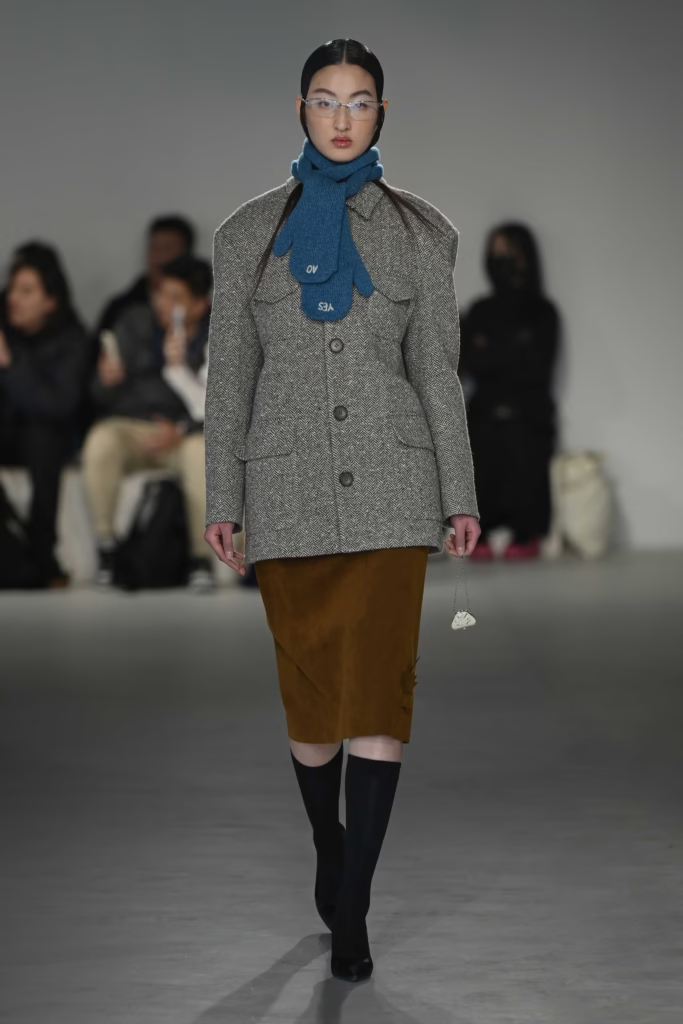
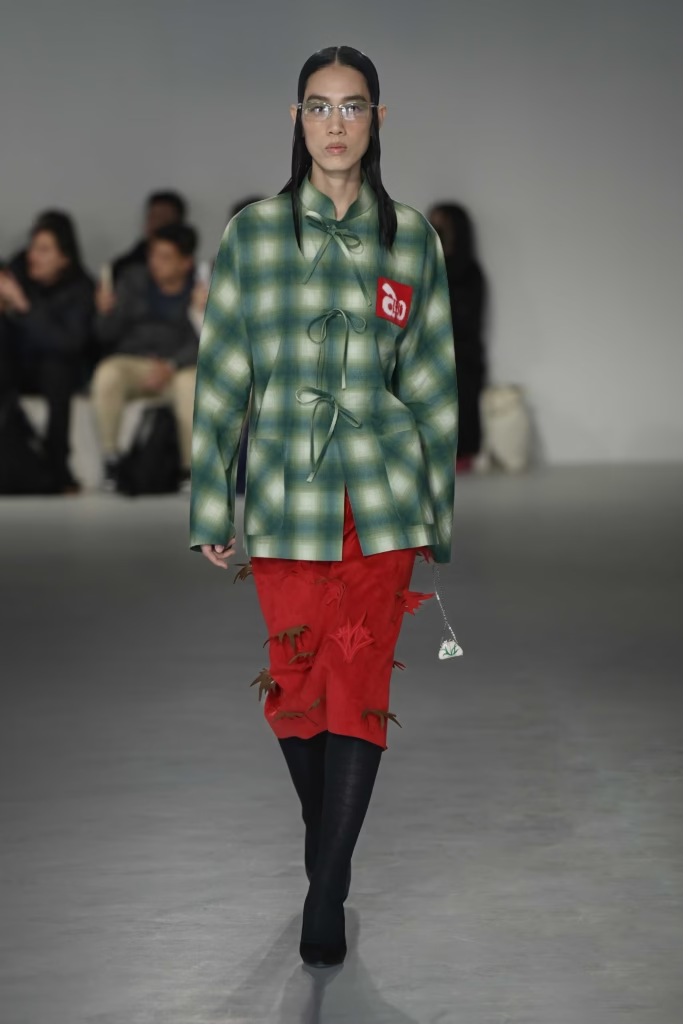
AO YES has consistently positioned itself between conservatism and modernism, utilizing bold color palettes and unexpected details to maintain a distinct identity. This season, the Mao jacket was revived with a subtle subversion: a blue scarf with glove-shaped ends replaced the jacket’s conventional austerity, injecting a touch of playfulness.
Craftsmanship was evident in miniature white handbags, held delicately between the models’ fingers—part of an ongoing exploration by designers Austin Wang and Yansong Liu, who have progressively reduced the size of their accessories. A commitment to contemporary, intricate sartorial decisions over strict traditionalism was further demonstrated through the Tang shirt reinterpretation, where the Mandarin collar remained but was paired with an expressive line of bows instead of traditional knot buttons.
Their recent collaboration with Zara, known for its niche yet commercially viable designs, reinforced the brand’s positioning: firmly rooted in national identity yet open to a larger, youth-driven market. Drawing inspiration from archival images of school uniforms from the Republic of China and juxtaposing them with iconic love stories from European and American cinema, AO YES solidified its status as a brand straddling the past and future.
“We wanted to express young, school love,” the designers remarked.
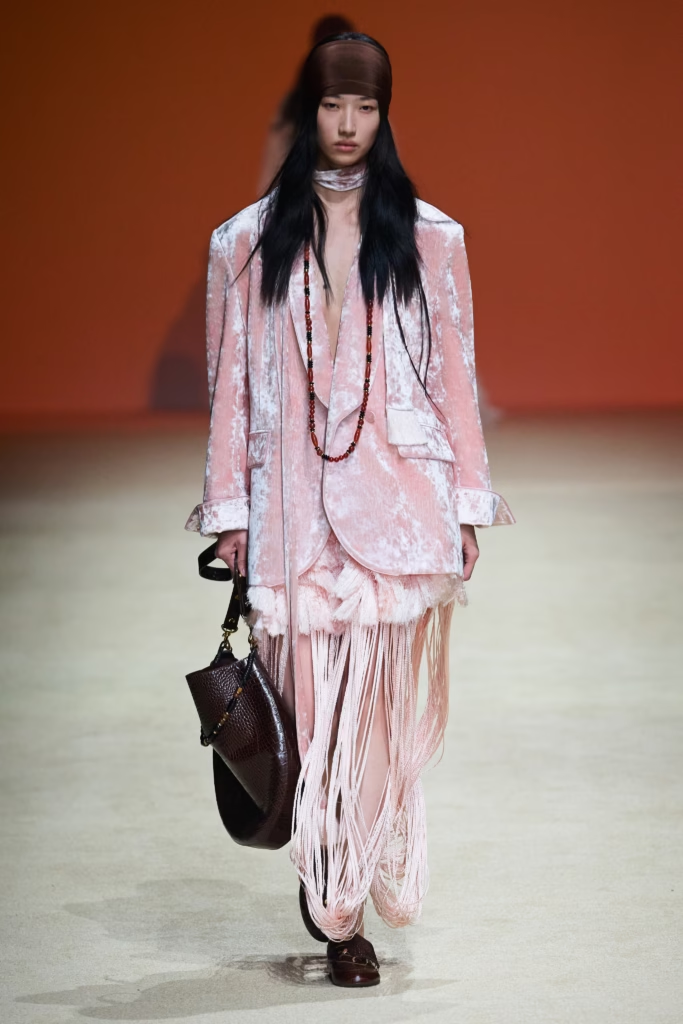
XU ZHI – From New Chinese Style to Boho-Chic
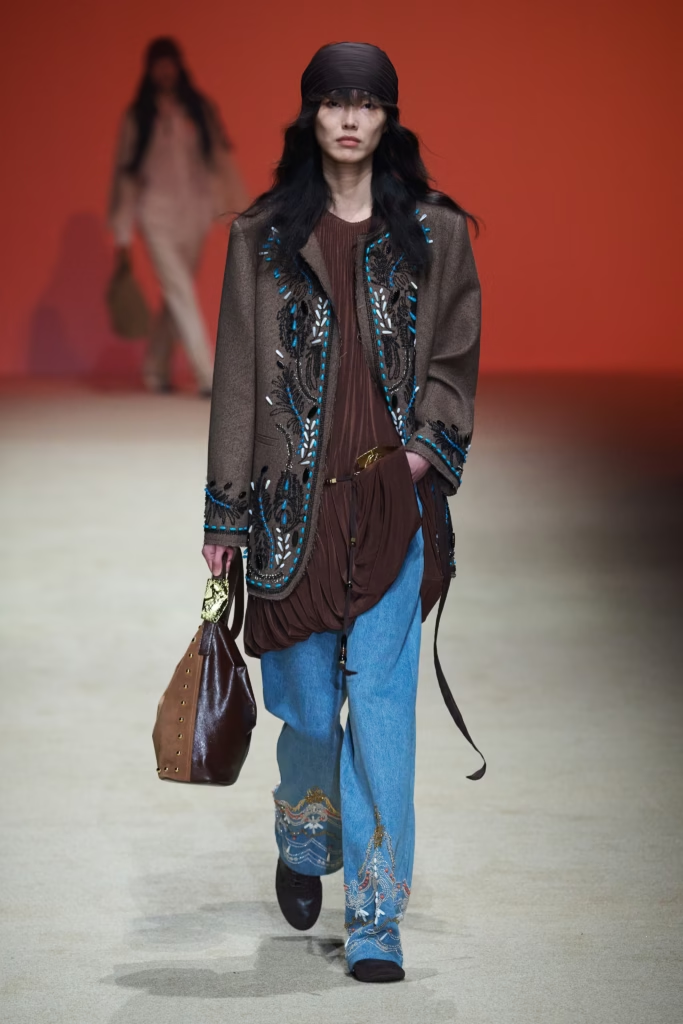
The evolution of Neo-Chinese style—a movement that emerged in the early 21st century to preserve traditional aesthetics while remaining relevant globally—took an unexpected turn toward boho-chic in XU ZHI’s latest collection. Frilled frocks with balloon hems, pirate boots, gypsy head wraps, beaded embellishments, Art Deco embroidery and traditional oriental motifs gestured toward a reinterpretation of bohemian fashion akin to Chloé or recent Blumarine collections.
For its 10th-anniversary showcase, the label, helmed by Xuzhi Chen, infused its New York-based sensibilities into a lineup that remained distinctly Chinese in its essence. By maintaining a delicate balance between heritage and global fashion currents, the collection stood as an assertive yet poetic statement on cross-cultural fluency.
‘’With so much of Chinese fashion changing these days, I thought I’d go back to [make] a very old-school, traditional fashion collection’’, affirmed Chen.
SHUSHU/TONG – Designed for an Export Audience
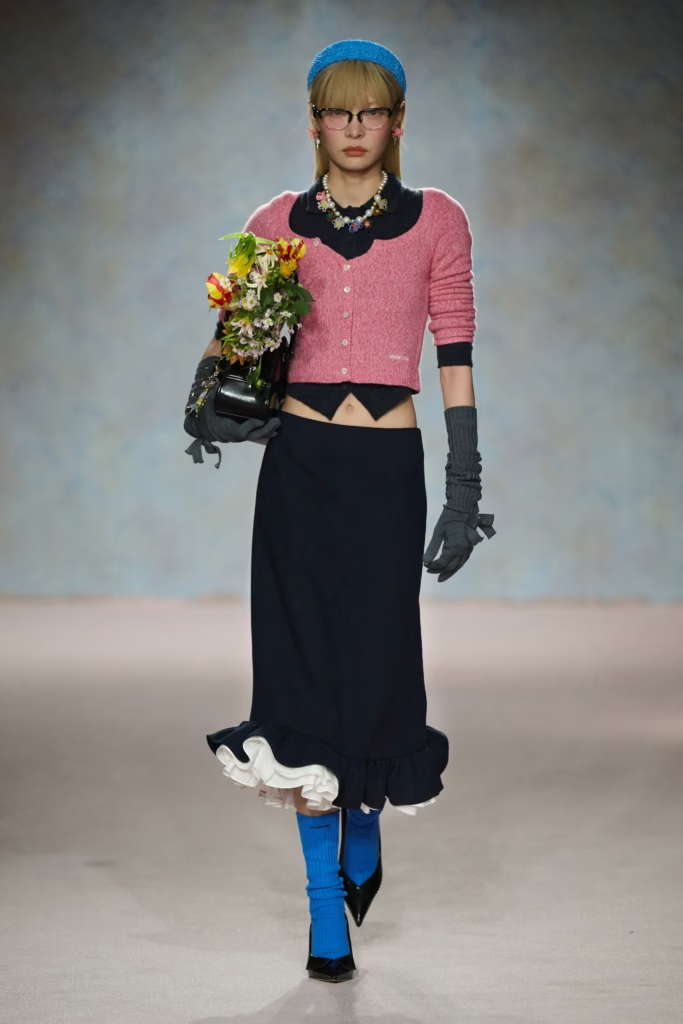
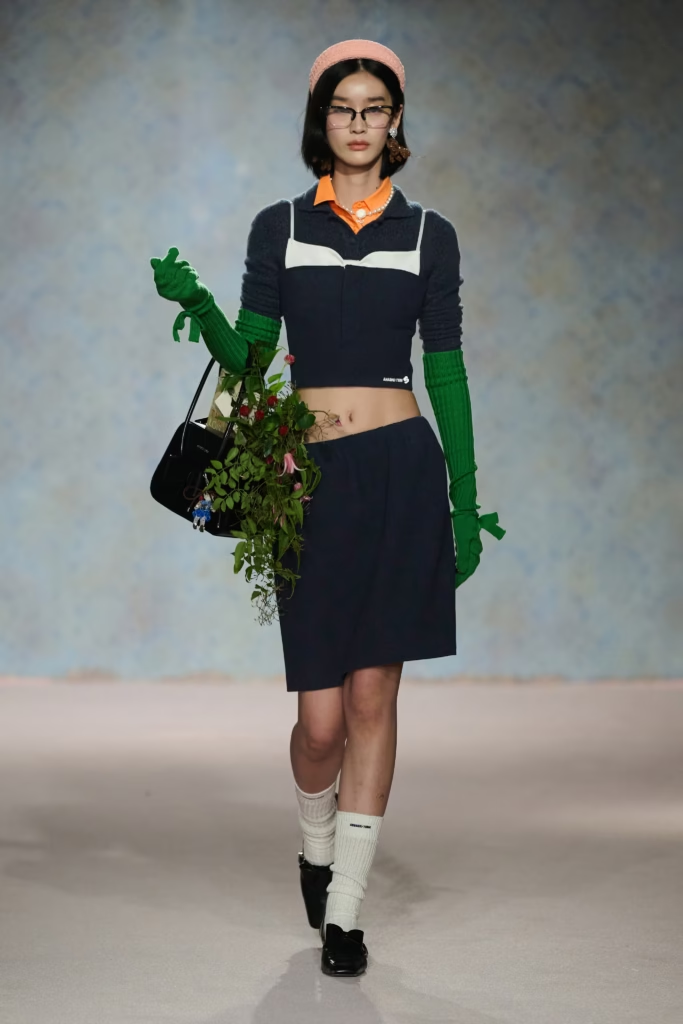
SHUSHU/TONG, founded by Liushu Lei and Yutong Jiang, has steadily cemented itself as an internationally marketable brand, reflecting an ultra-feminine aesthetic with widespread commercial appeal. Its affinity with Miu Miu’s intellectual, office-core femininity is evident, yet it differentiates itself through a meticulous approach to tailoring and styling.
This season, the designers leaned into a deliberate contrast between the mundane and the opulent—fruits, flowers, baguettes, and books peeking out of structured handbags recalled Undercover, Bottega Veneta, and Petar Petrov’s playful juxtapositions. Experimentation surfaced in the form of unconventional layering: thick gloves worn over a tight-fitting blouse with a white-bra motif, juxtaposed against an orange polo shirt, sporty capri pants, micro-shorts, and ultra-feminine accessories. While embracing avant-garde elements, the collection remained rooted in the brand’s core identity, signaling a new era of adaptability and openness.
“She’s just wearing these clothes, going to the grocery store, going back home,” the designers mused, underscoring the effortless appeal of their designs.
Private Policy – An Era of Dressing for Status – Declined
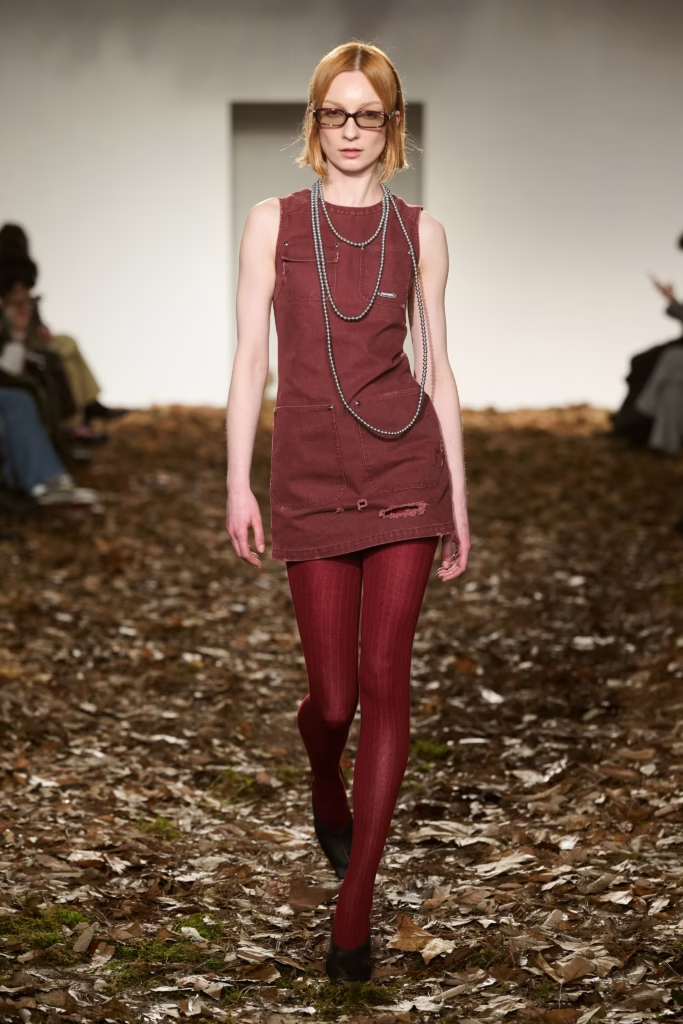
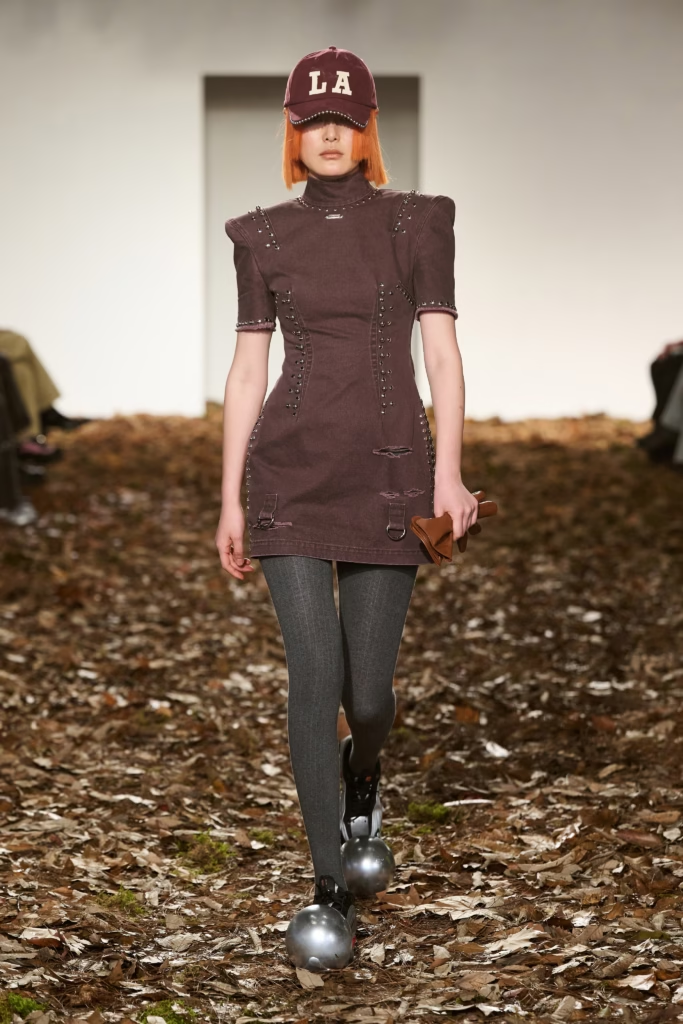
Siying Qu and Haoran Li of Private Policy turned their attention to the evolving relationship between fashion and social status. Presenting their collection on a runway covered in autumn leaves, the designers playfully dissected the paradox of “old money” aesthetics, questioning the ways younger generations—particularly Gen Z—engage with clothing.
Denim minidresses with stitched-in pockets, pleated skirts, and coordinated twinsets evoked Diesel’s youthful irreverence, while futuristic elements—such as 3D-printed metallic spheres and exaggerated, pointed plastic sneakers—added a subversive edge. The infusion of ultra-padded shoulders, sequins, and metallic fabrics subtly nodded to Balenciaga, though Private Policy’s approach remained more restrained and varied, offering a balance between tradition and modernity.
“We think it’s ironic that a lot of people dress ‘old money’ when they’re not,” the designers remarked, encapsulating the irony at the heart of contemporary fashion aspirations.
Shanghai Fashion Week AW25 heralded an era of broader global integration, where designers experimented with new strategies to expand their reach while maintaining a distinct, culturally embedded identity. By balancing tradition with modernity – and Eastern sensibilities with Western appeal, this season underscored the city’s growing influence within the global fashion landscape.
Photos: Vogue Runway


