


Botulinum toxin (commonly known as Botox) has become a staple in aesthetic medicine for its ability to smooth wrinkles and reduce muscle activity. While the average duration of results is between 3 to 4 months, some people notice that their results last significantly longer. What’s the science behind this?
✅ Individual Metabolism
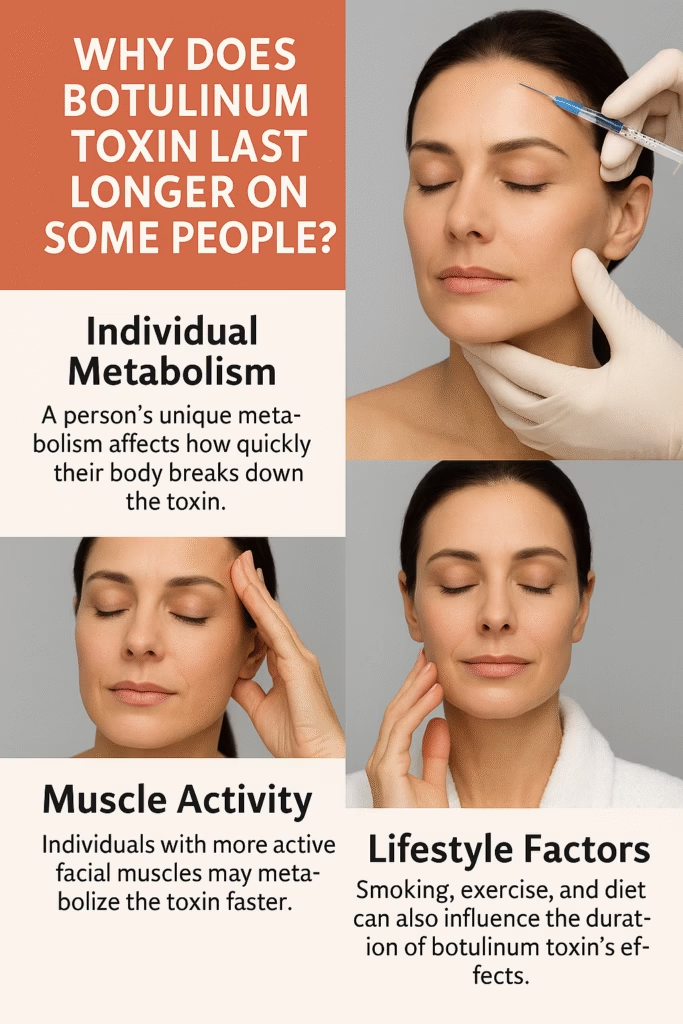
One of the main factors is metabolism. People with faster metabolic rates tend to break down the toxin more quickly. Athletes or individuals with highly active lifestyles may find that their Botox wears off faster compared to those with slower metabolic activity.
🧬 Muscle Strength & Activity
Muscle mass and how frequently you use certain facial muscles also play a role. Stronger or more active muscles may metabolize the toxin faster, while less active areas maintain results longer.
🩺 Dosage & Injection Technique
The amount of toxin used and the precision of the injection can also affect longevity. Experienced injectors who understand facial anatomy can target muscles more effectively, which may prolong the effect.
🧖♀️ Skin Quality & Age
Younger individuals or those with more elastic skin may notice longer-lasting results because their skin structure supports the toxin’s effects better.
🧪 Immunity & Repeated Use
In rare cases, people can develop antibodies to botulinum toxin, which reduce its effectiveness. Conversely, some regular users find that with consistent treatments, the muscles weaken over time, and the effects last longer.
⏳ The Bottom Line
Botox doesn’t work the same for everyone. Genetics, lifestyle, and technique all contribute to how long it lasts. A personalized treatment plan and a skilled injector are key to optimizing results.


