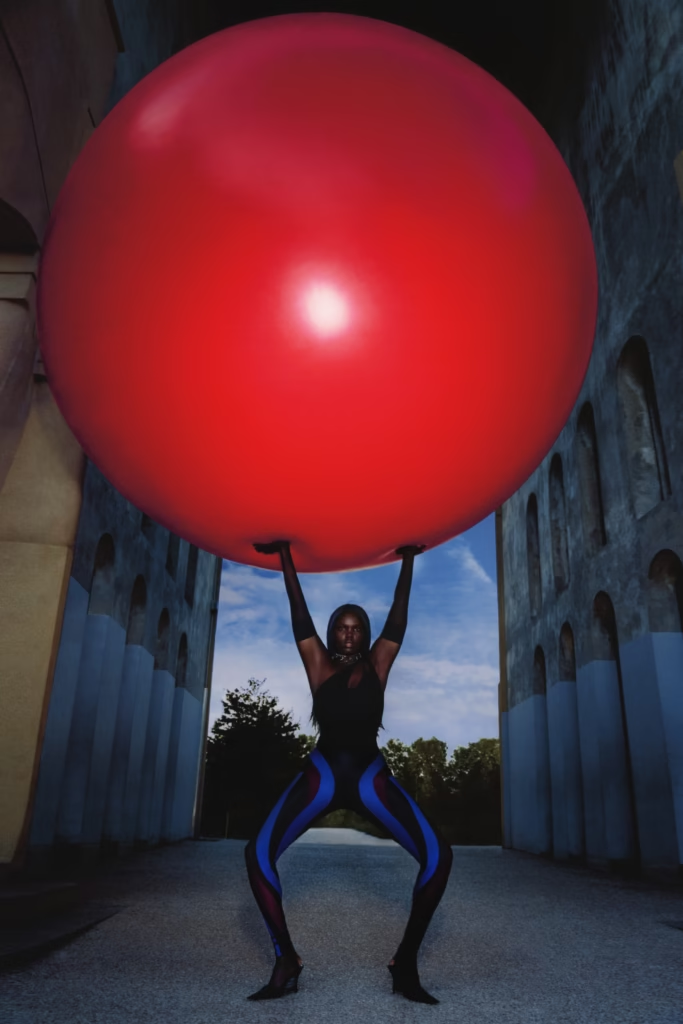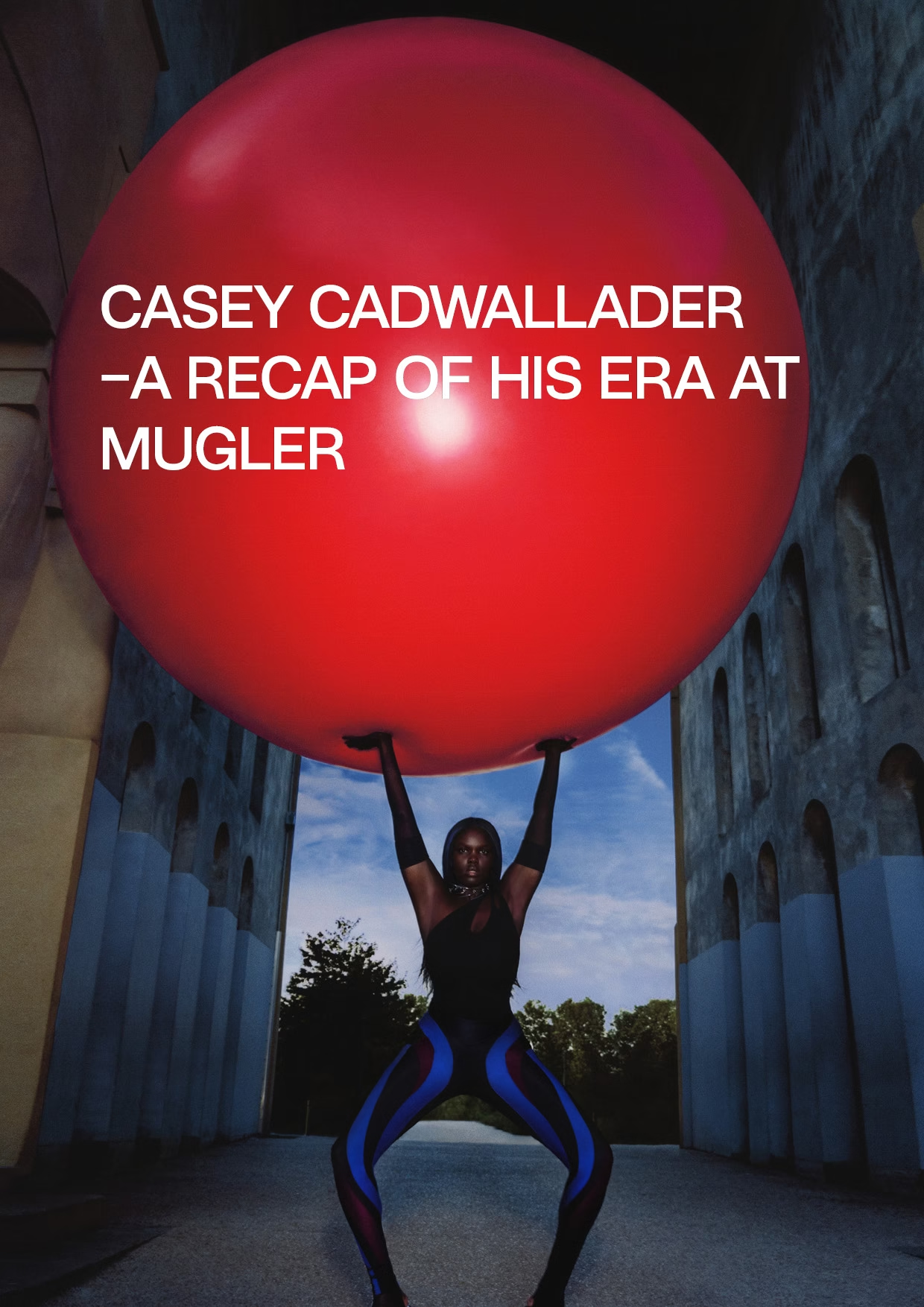
As of April 1st, Casey Cadwallader’s seven-year tenure at Mugler has officially concluded, making way for newly appointed creative director Miguel Castro Freitas. This marks a fitting moment to reflect on Cadwallader’s legacy—an era defined by innovation, inclusivity, and boundary-pushing aesthetics that set him apart from both his predecessors and likely successors to come.
The pioneer of negative space and sensuality
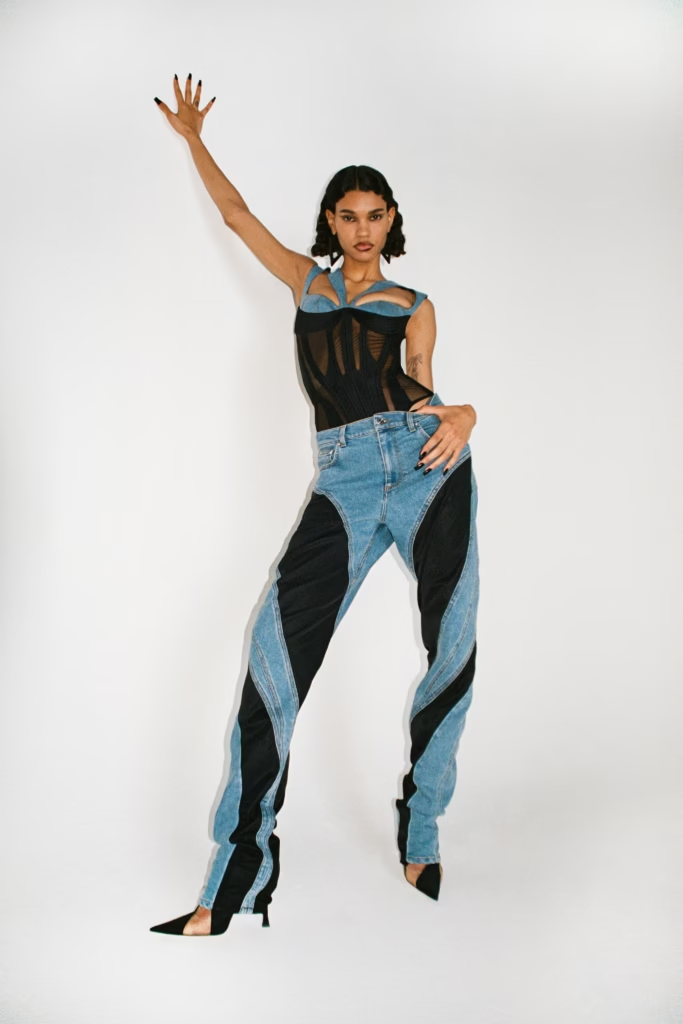
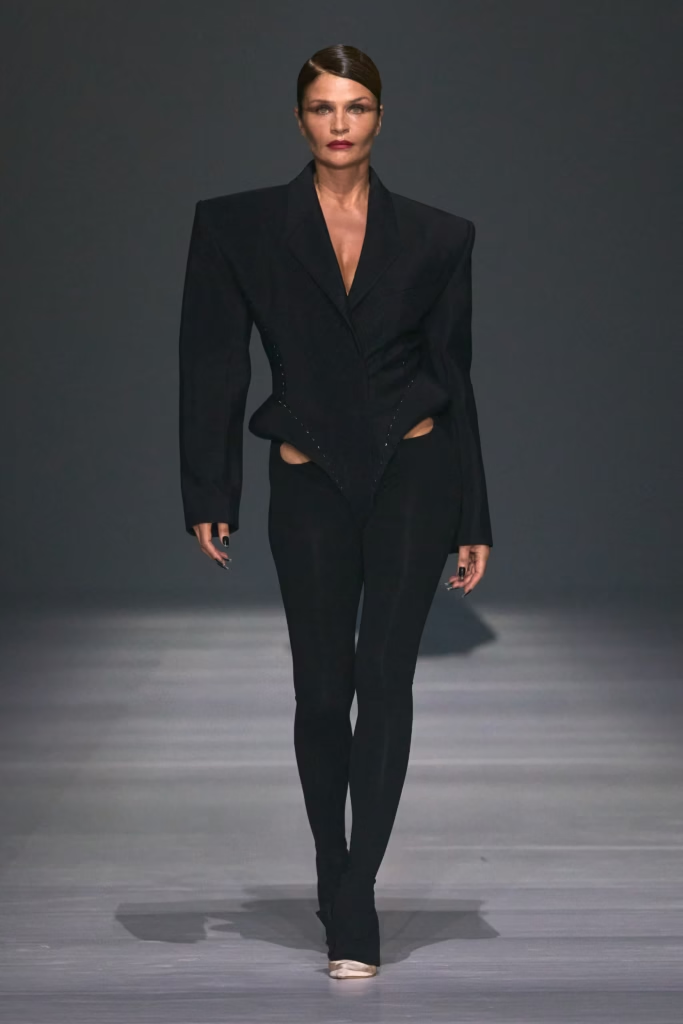
Cadwallader was the one responsible for revitalizing Mugler’s image by infusing the Paris-based brand with an ultra-inclusive, New York sensibility focused first and foremost on fierce, futuristic glamour. His famous semi-transparent catsuits that created a nude illusion, because of the skin-revealing openings – were undeniably the hits of his tenure – exquisitely executed to fit every type of body, thus attempting a difficult balance – sensual and non-discriminating fashion. A masterful playing with negative space – has brought him more than positive reviews and most important – revenues. Alternating sheer fabrics with corsets and strategically inserted cutouts – created eventually the recognizable and modern signature Mugler silhouette, craved by many girls and influencers – some that even maybe managed to get their hands on a pair of tailored, slim-fitting jeans or tops from their devoured collaboration with H&M in 2023.
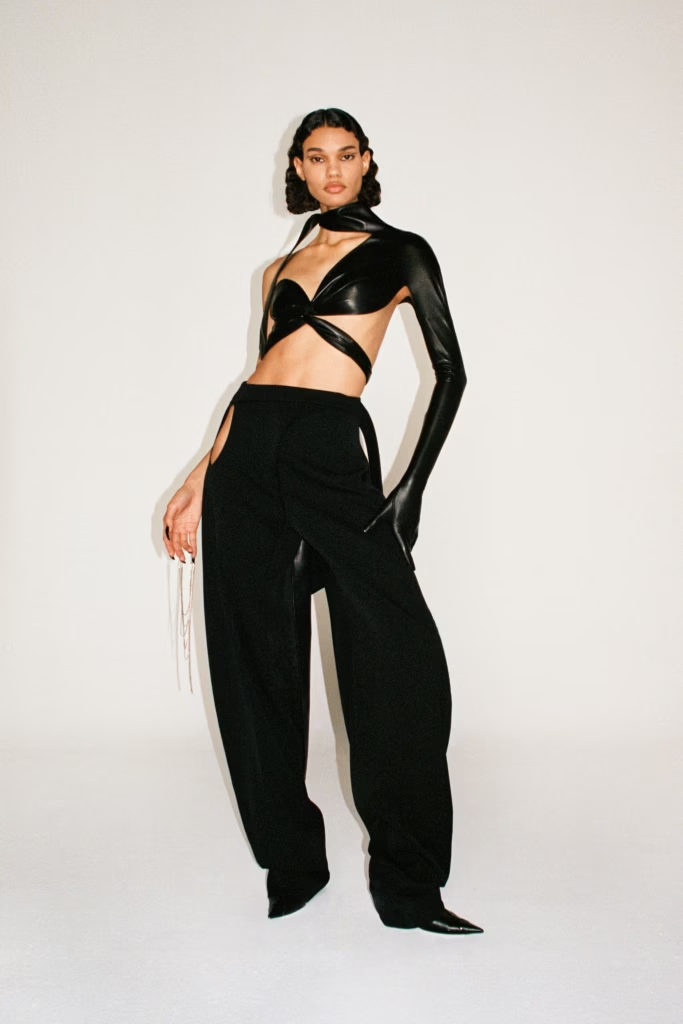
Elevating Everyday elegance
In comparison to his predecessor, David Koma – now creative director at Blumarine, who focused on performative art that mostly required an occasion, Casey Cadwallader has managed to translate intricately elegant designs into the register of no-reason wearability. Proof of his main purpose of introducing the house’s name to a more extensive and convenient market, marks the initialization of the aforementioned partnership with a mass-market company, as well as the fundamental switch to clean, simple and edgy pieces that could be seamlessly integrated into everyday wear.
Accentuating the waist through the smart art of corseting, reveals one of the primary techniques, Cadwallader decided to focus his creative mind on when taking the job – harnessing it in a variety of hybridized, yet unpretentious examples – integrated consecutively in suits, jackets and gowns. Unafraid of different uses of fabrics and their congruent manipulations – from classic denim, satin fringes or flowing tulle to more experimental ones as plexiglass and tromp-loeuil Lycra – the designer explored the previous direction of exclusive showmanship whilst staying opened to a consistent audience that desired sexy, empowering garments on a daily basis.
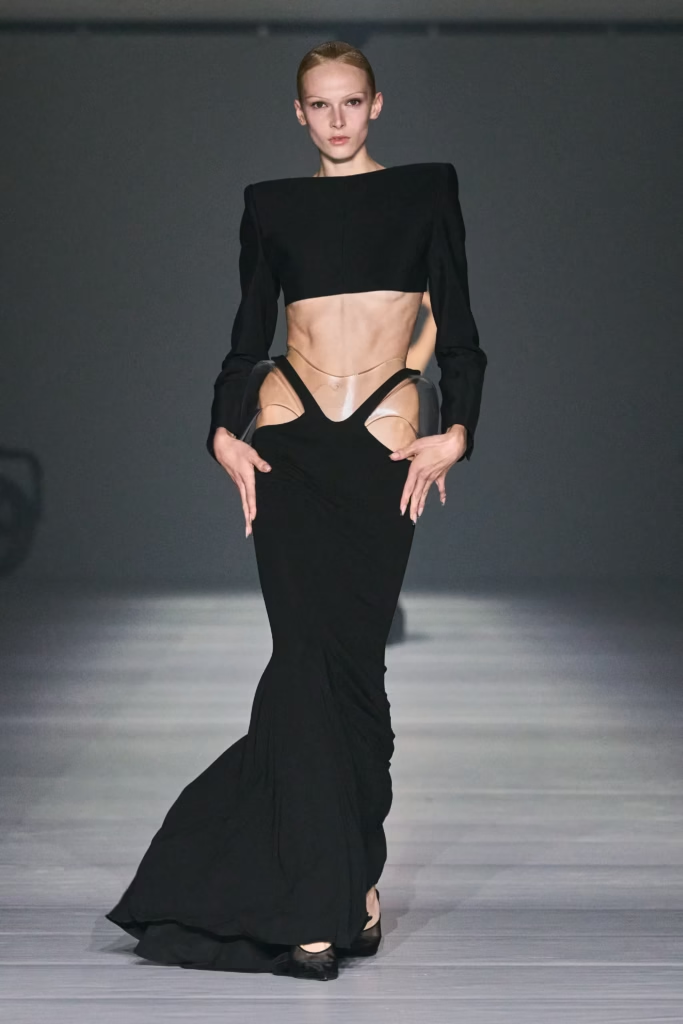
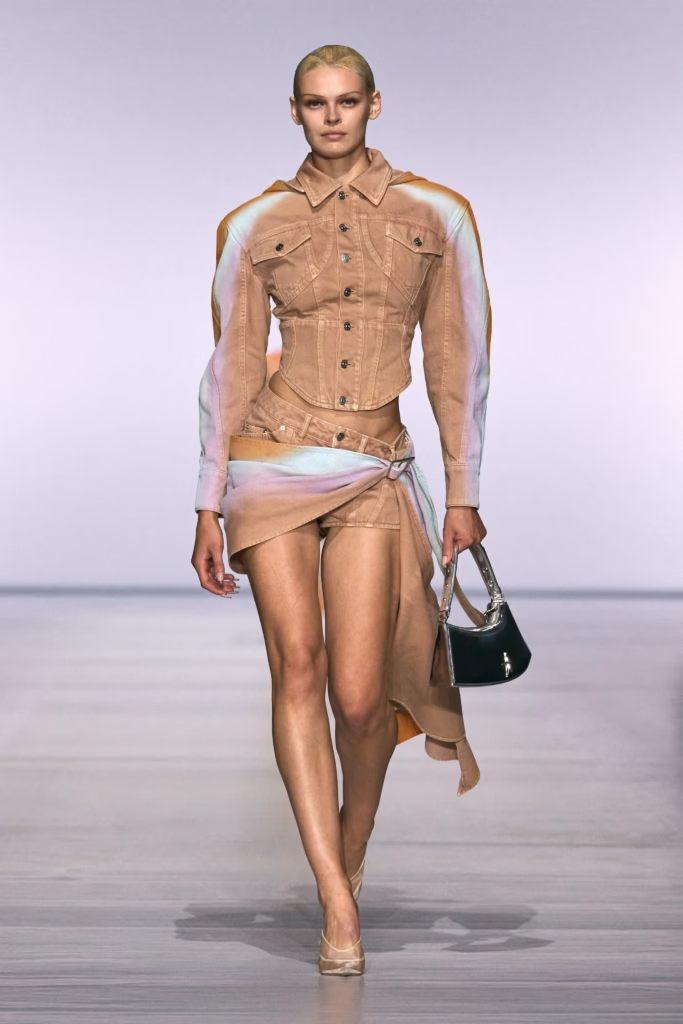
Items like black blazers and dresses with built-in corsets translated the much needed, unexaggerated elegance, one wishes to implement with versatility in ordinary contexts – such as both corporate duties and evening outings. His designs filled a unique place in fashion, that was not necessarily acknowledged as missing, but emerged in everyone’s mind as an essential, imperative style.
A Home for All: Diversity as DNA
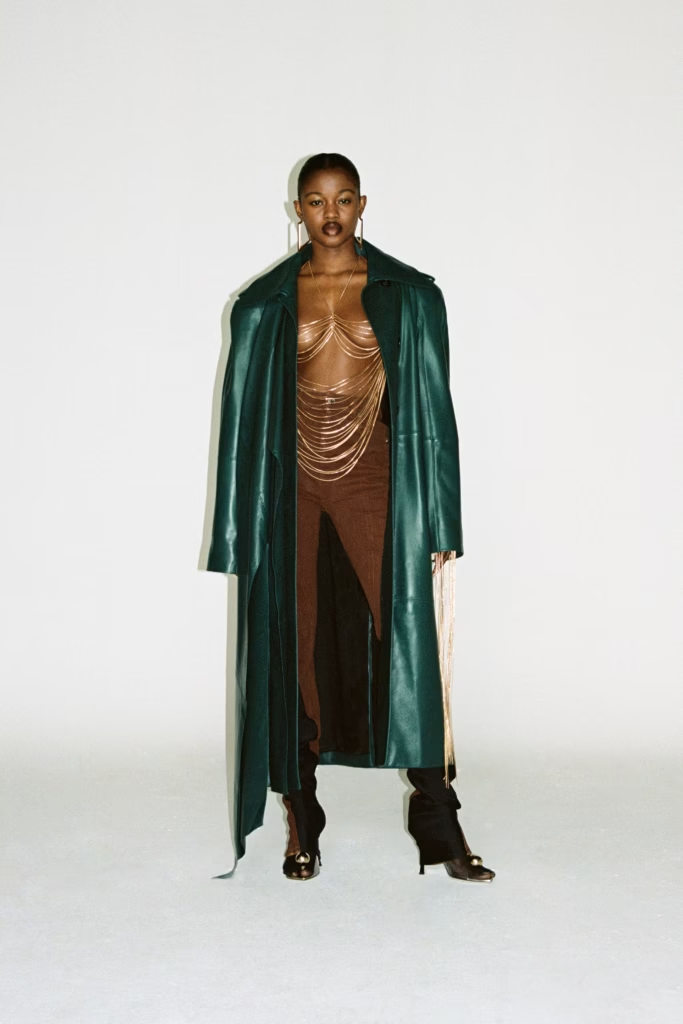
From the outset, Cadwallader proclaimed that Mugler should reflect all races, genders, and sizes. This inclusive ethos was echoed not only in casting choices, like transgender icons Hunter Schafer and Dominique Jackson, but nonetheless in garment construction. Mugler pieces were made with stretch, corseting, and body-specific tailoring that flattered and fit universally. Perhaps no moment better captured this than Schafer’s now-iconic water-drenched runway performance in 2021, combining choreography, costume, and emotion into a living tableau of Mugler’s future-facing messages.
The catsuit, with predilection, embodied the revolutionary item that was no longer destined only for perfectly-shaped, sample-sized models – creating a globally-available statement of daring sexiness, worn defiantly from medium to maxi-size figures included.
The Legacy of Spectacle: From Real Locations to Visual Mastery
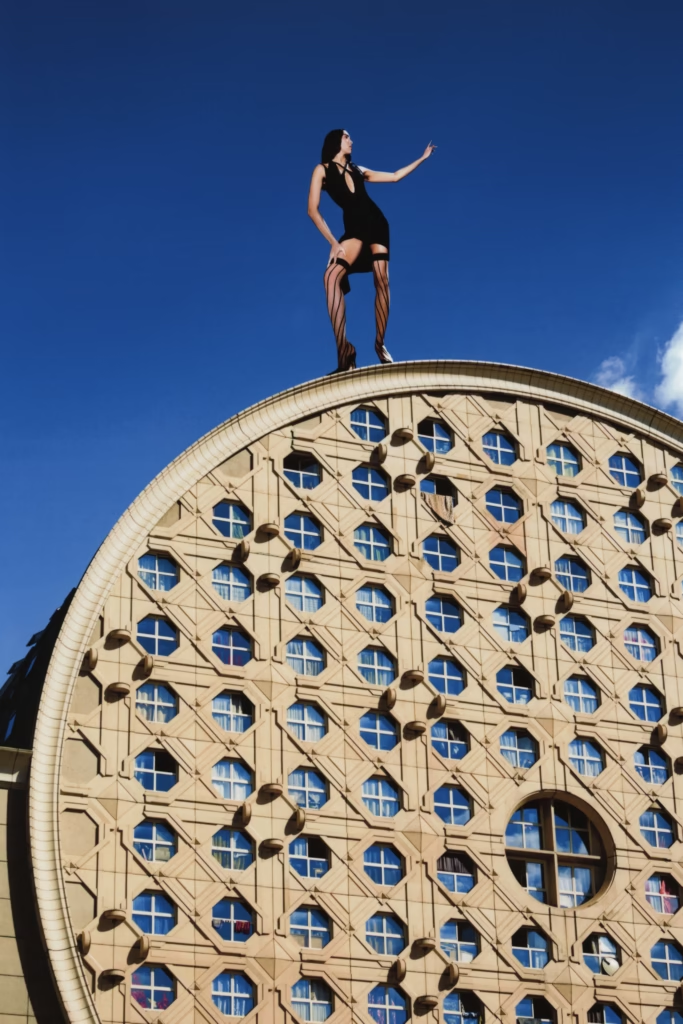
As the last Mugler director to work with Manfred Thierry Mugler as a creative advisor to the house, the intrinsic influence of its founder has been vividly felt, within the location scouting too. However, the former great master oftentimes used his own photography skills and producing visions to immortalize a cast of monumental, audacious characters in similarly gravity-defying backgrounds – without the modern use of green screens or Photoshop. Mugler’s models celebrated the transformative, magnifying nature of fashion by becoming otherworldly deities lounging on ice caps, posing on the edges of rooftops, statues or similarly dangerous scenes – an extravagant feeling Cadwallader attempted to portray through his individual perspective, although just for a couple of times.
Inspired by the iconic photography, where model Angelina Wilde, ascended the giant, red Sovietic star-shaped building in 1986, intitled Volograd countryside, situated against the bright-blue sky – a shooting done by Mugler for his friend Azzedine Alaia – Casey Cadwallader seemed to reinterpret it in his Resort 2021 collection, in the same particularly surrealistic manner – just for a single, homage attempt.