


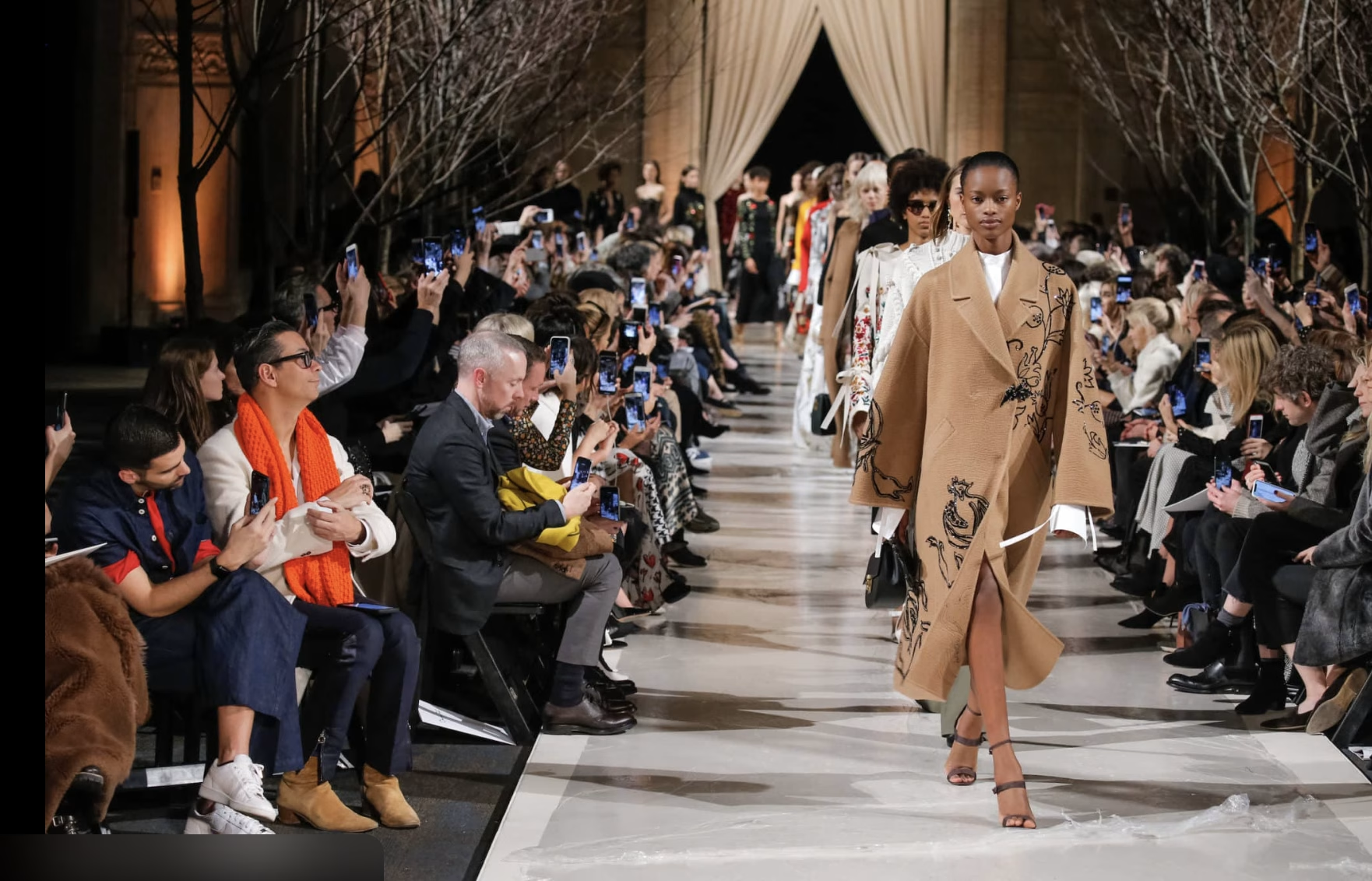
New York Fashion Week has always been a stage where ambition meets reality. This season is no different: some brands are thriving in the contemporary boom, while others face a far less certain future. Despite tariffs and ongoing economic headwinds, there are still plenty of American fashion success stories but only a few will make it onto the runway.
Interestingly, the usual mass-market collaborations are mostly absent. While Gap may still manage to insert itself into the conversation, mall retailers appear comfortable operating outside the fashion week spotlight. It’s unlikely that any runway show in the coming days will rival the cultural impact or sales of American Eagle’s recent one-two punch featuring Sydney Sweeney and Travis Kelce.
What New York does have this season is a surge of contemporary names. As luxury grapples with stagnation and relentless price hikes, American labels are seizing the opportunity. There is no shortage of brands offering refined bags and clothing to shoppers unwilling to pay Dior or Gucci prices. Ralph Lauren is showing on September 10, ahead of the official start of the week, while Coach and Tory Burch are steady presences, and Jenni Kayne is marking the beginning of an international expansion. Among the few non-US brands on the schedule, the emphasis is again on sleek minimalism, with Cos from the UK, Toteme from Sweden, and Ukraine’s Bevza standing out.
For most of these players, New York is just one of many marketing opportunities not necessarily the most important one. Calvin Klein, however, is in a different position. Its recently revived Collection line, led by creative director Veronica Leoni, is aiming to prove that the house can be about more than underwear, denim, and fragrance. A buzz-worthy runway show could help reposition the brand in the minds of consumers.
As always, emerging designers and small luxury labels make up much of the schedule. Yet for them, the central question remains: is the short-term attention of fashion week worth the long-term cost?
This year, those questions are complicated further by the uncertain state of wholesale. Ssense a critical retailer for dozens of brands presenting in New York is preparing to file for Canada’s version of bankruptcy protection. Founder and CEO Rami Atallah has promised business as usual during the restructuring process, but with sales down and lenders pushing for a sale, designers are left uneasy. For many younger labels, Ssense has been not just a retail partner but a lifeline.
The result is a season defined as much by caution as by creativity. New York remains a vital stage, but one where the tension between growth and survival has never been clearer.


