


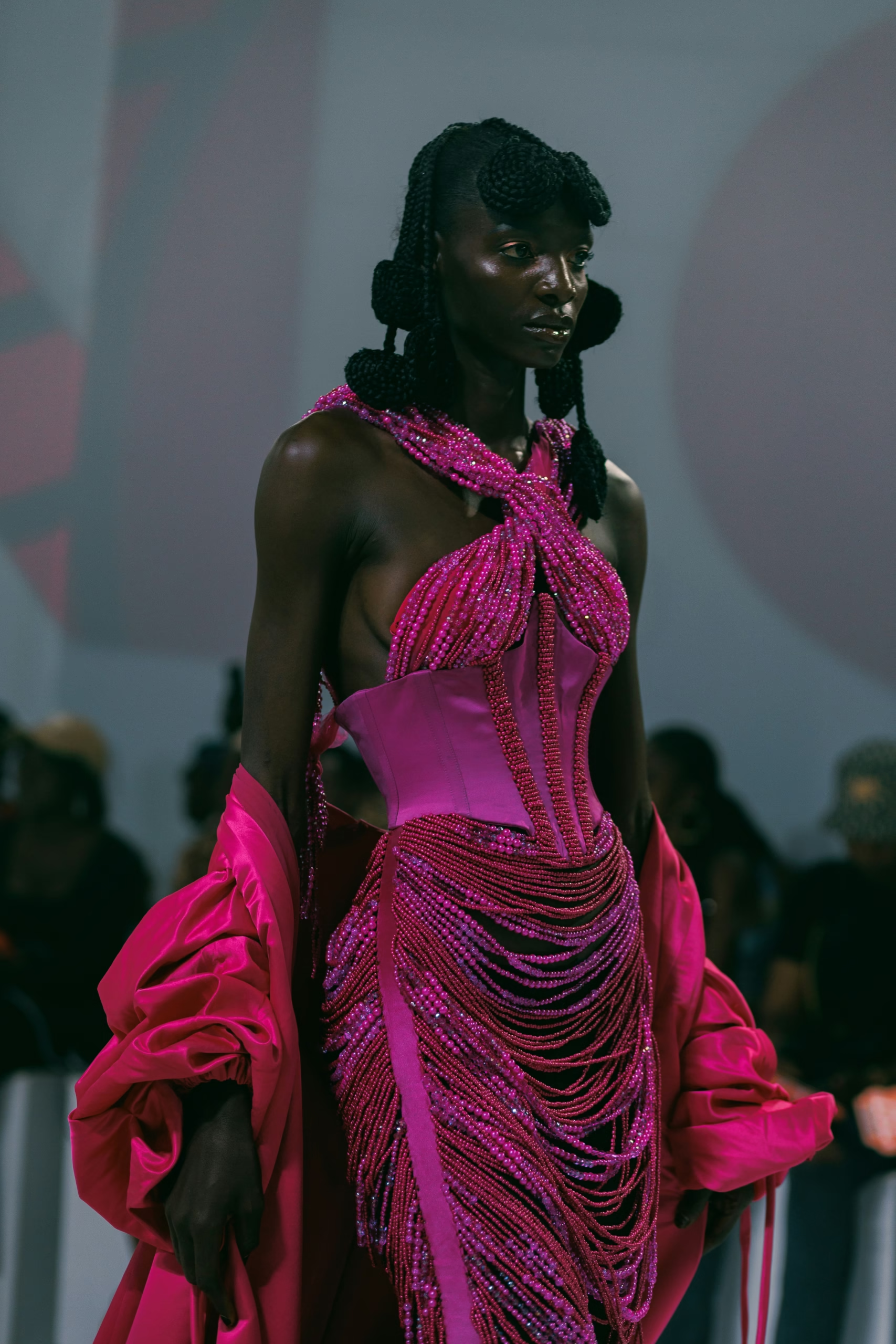
When the Met Gala rolls out its crimson steps, fashion’s elite don’t just strut—they send messages. But this year, the message is loud, layered, and unapologetically political. With the Costume Institute’s spring exhibition, Superfine: Tailoring Black Style, anchoring the gala’s theme, 2025’s Met moment isn’t simply about aesthetics. It’s about power. Presence. Protest. This is resistance stitched into silk lapels and custom brocade—tailoring as testimony.
Suits of Armor: The Met Red Carpet Reimagined
Picture this: a runway flooded with regality, a sharp contrast to the typical whisper of chiffon. Instead, watch as guests arrive cloaked in cut-to-kill tailoring, silhouette-strong and era-bending. From crushed velvet frock coats evoking Harlem Renaissance swagger to sharply tailored zoot suits that nod to 1940s subversion, this year’s red carpet is not just spectacle—it’s storytelling.
Pharrell Williams, this year’s co-chair and Louis Vuitton Men’s Creative Director, leads the charge with his signature blend of Savile Row polish and Southern Black church realness. Colman Domingo and A$AP Rocky, also co-chairs, are expected to merge high tailoring with radical cultural codes—think suiting that tells its history, whether in silk jacquard or rhinestone-studded crepe.
The Root of Rebellion: A Crash Course in Black Dandyism
The backbone of the theme lies in resistance woven into threads. Black dandyism, which dates back to the 18th century, began as a form of subtle yet potent rebellion. Enslaved and marginalized individuals reclaimed European fashion not to emulate whiteness, but to weaponize style, flaunting individuality and intellect through their clothing.
Monica L. Miller’s book Slaves to Fashion serves as a conceptual compass here, revealing how Black style has always been as much about subversion as self-expression. In an era when even self-presentation was policed, dressing well became a radical act. That same spirit echoes through Superfine, curated to challenge Western fashion hierarchies by placing Black elegance at the center of the narrative.
Inside ‘Superfine’: A Gallery of Expression
Curated into twelve thematic vignettes drawn from Zora Neale Hurston’s iconic essay Characteristics of Negro Expression, Superfine is more than an exhibit—it’s a manifesto in motion.
- Ownership juxtaposes the livery of enslaved men with bespoke suits by Black designers like Waraire Boswell and Dapper Dan, highlighting the shift from servitude to self-determined sartorial identity.
- Jook pulses with the energy of 1940s zoot suits, oversized and defiant, capturing the exuberant defiance of Black nightlife culture.
- Cosmopolitanism threads the global, from Virgil Abloh’s Off-White runway feats to Wales Bonner’s diasporic tailoring, proving Black fashion isn’t a moment. It’s a movement.
Each section is a call to remember—and reimagine—Blackness in all its dimensionality, through the medium of cloth, stitch, and swagger.
“This isn’t fashion for the feed—it’s resistance stitched in satin.”
Icons of Influence: The Shoulders We Stand On
Before the 2025 Met Gala’s guests pose under the Met’s grand arches, they walk in the footsteps of legends.
André Leon Talley’s ecclesiastical capes. Diahann Carroll’s regal grace. James Baldwin’s scholarly sharpness. These icons didn’t just wear fashion—they made it speak. Talley’s presence, in particular, still looms large: he transformed the vocabulary of fashion critique while never relinquishing his Blackness, his queerness, or his flair.
Then there’s Naomi Campbell—the original runway sovereign—who turned every couture show into a lesson in legacy. Grace Jones, with her androgynous tailoring and boundary-blurring glam, rewrote fashion’s rules decades before the rest caught up.
They paved the satin-slick runway for today’s cultural titans. Their style wasn’t about the trend. It was about truth.
Who’s Wearing Who? Black Artists in Black-Owned Couture
For Black celebrities walking this year’s Met carpet, fashion won’t be about flash—it will be about coded elegance, cultural power, and silhouette as storytelling. With Black-owned couture at the heart of it all, expect statement-making shapes and nuanced nods to identity:
- Rihanna may arrive swathed in sculptural volume—think rose-like folds or an enveloping cape that redefines maternity glamor.
- Zendaya could serve cinematic romanticism: a puff-sleeved, high-drama silhouette with era-bending layers and subtle rebellion.
- Naomi Campbell is likely to float in a liquid silk column—minimalist yet mythic, with heritage woven into the seams.
- Lil Nas X might deconstruct gendered style entirely—structured corsetry, pearl-laced tailoring, and a cloak that dares you to look closer.
- Beyoncé, if present, will transcend theme—expect a train, expect symbolism, and expect fashion that whispers royalty.
- Doechii has been dropping subtle clues on Instagram—a cryptic caption and fit summoning André Leon Talley essence. All signs point to a look inspired by the late fashion titan himself. Expect capes, drama, and a tribute stitched in reverence.
This year’s fashion isn’t just worn—it’s wielded. Couture becomes resistance. Style becomes legacy.
More Than Fashion—A Political Thread
Tailoring has always been political. From the plantation to the pulpit to the pop charts, Black style is how stories are preserved, recontextualized, and projected into the future. As Superfine makes clear, fashion isn’t frivolous—it’s archival. The zoot suits of the 1940s were literal acts of rebellion, worn by young Black and Brown men in defiance of wartime rationing laws. Today, the same attitude pulses through runway collections and red carpets alike.
This year’s Met theme doesn’t just acknowledge history—it corrects it.
Closing Stitch: A Night Worth Remembering
Superfine isn’t just an exhibition, and the 2025 Met Gala isn’t just a party. It’s a reclaiming. A reframing. A resounding declaration that Black fashion is not derivative—it’s origin. In a cultural climate where identity is both celebrated and weaponized, the choice to wear Black excellence isn’t just personal. It’s political. And this year, it’s dressed to resist.


