


A new chapter has begun at Givenchy, and Sarah Burton is at the helm, wielding the weight of legacy with a masterful hand. After her decade-defining tenure at Alexander McQueen, where she sculpted sharp silhouettes and embroidered stories into fabric, Burton has stepped into the house of Givenchy with a vision that both respects and redefines its DNA.
Her debut collection is not a loud rebellion but a quiet, intentional shift—one that leans into the codes of the house while twisting them into something profoundly modern. The Givenchy woman is still elegant, restrained, and impeccably composed, but now she’s cinched at the waist, her hips exaggerated in sculptural curves, her steps grounded in unapologetic practicality. This is not fashion for the sake of excess—it’s fashion built for the way women move through the world.
The Givenchy Blueprint, Reimagined
At its core, Givenchy stands for precision—for the architectural sharpness of black dresses, the effortless nonchalance of flat shoes, and the quiet power of clean lines. Burton took these house codes and infused them with a deeper sense of history, looking back to Hubert de Givenchy’s first collection, designed during World War II.
Fashion in wartime was dictated by necessity, and this influence seeped into Burton’s designs. There is a practical elegance in the garments—utility meets haute couture. Silhouettes are sculpted yet unrestrictive, with a focus on sharp tailoring, high-function detailing, and fluid construction that moves with the body. The result? A collection that feels timeless yet distinctly of the moment.
The Rise of the Givenchy Blazer: A Power Shift
For the past few seasons, the oversized menswear blazer has reigned supreme—slung over shoulders, boxy and androgynous, a borrowed-from-the-boys statement piece. But Burton’s Givenchy introduces a new power player: the sculpted, hyper-feminine blazer.
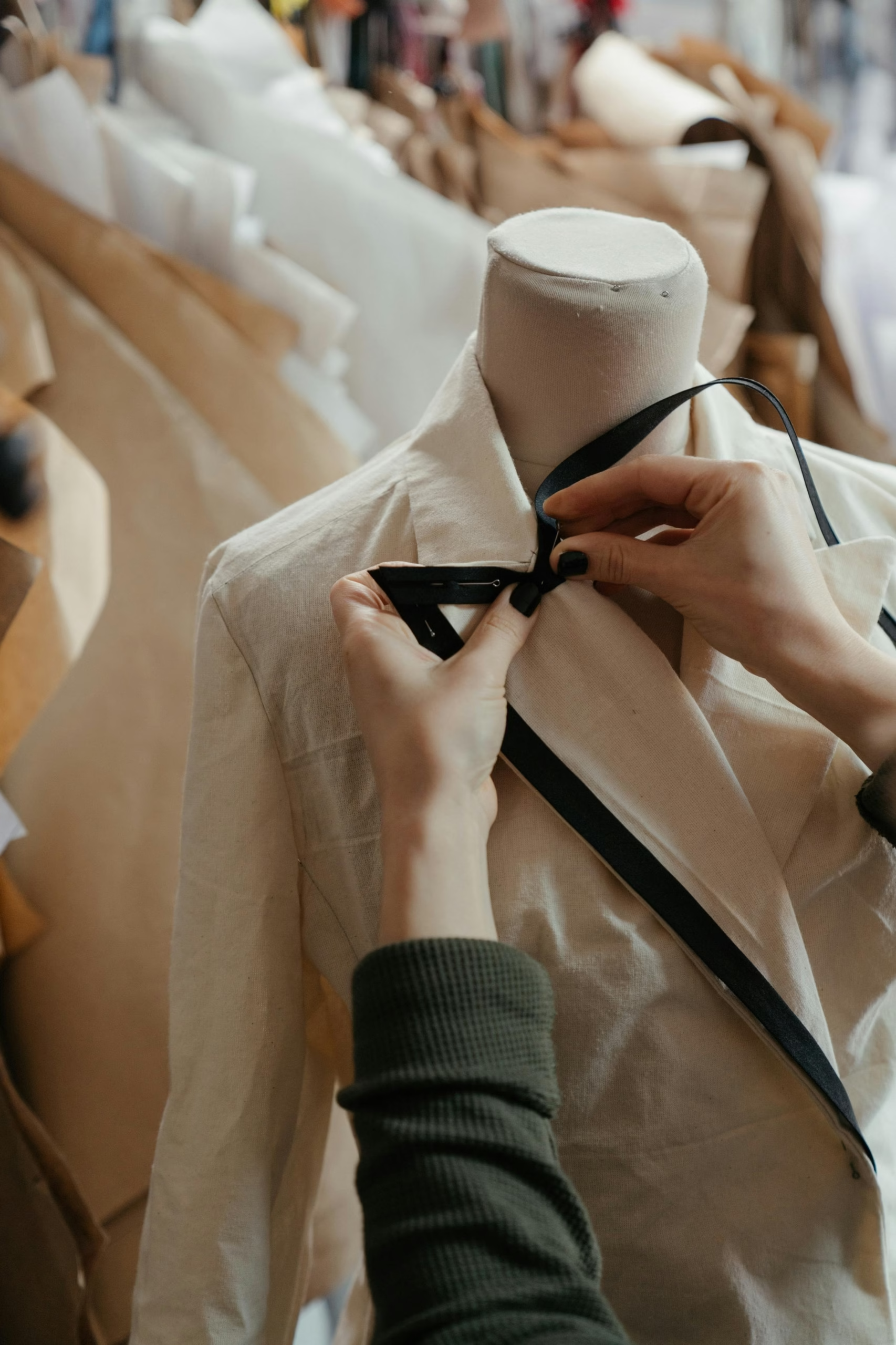
Structured shoulders carve out an authoritative frame, while razor-sharp tailoring nips the waist into submission. The exaggerated hourglass silhouette, reminiscent of the 1940s, is undeniably powerful—but in a way that celebrates femininity rather than neutralizing it.
Could this be the beginning of the end for the oversized menswear blazer? Givenchy’s version offers something different: a blazer designed for the female form, not adapted from the male wardrobe. It’s strong, it’s sensual, and it just might reshape power dressing for years to come.
A Lemon Yellow Interruption—And a Hollywood Tease
In a collection drenched in Givenchy’s signature noir, a single shade cut through the darkness: lemon yellow. The unexpected pop of color felt like a direct nod to the house’s archives, where Givenchy himself often played with soft, golden hues against black.
But fashion insiders are speculating—was this also a deliberate teaser? A whisper of Timothée Chalamet’s Oscars moment, where he took the red carpet in a Givenchy look that echoed this very shade? Burton knows how to craft a narrative, and this splash of citrus was more than a color choice—it was a statement.
“The Givenchy woman isn’t just elegant—she’s structured, sculpted, and ready to redefine power dressing on her own terms.”
The Masterpiece: A Dress Made of Time Itself
Every collection has its crown jewel, and in Burton’s Givenchy debut, it was a dress that was both an artifact and an innovation.
The “pièce de résistance” was constructed entirely from antique makeup compacts and an intricately embroidered mirror, transforming forgotten objects into something breathtakingly new. This wasn’t just a garment—it was a reflection of time itself, a mosaic of beauty and decay woven into fashion.
- The cage bustier sculpted the upper body with stark, architectural precision, playing with the idea of structure as both armor and adornment.
- The mini skirt was exaggerated and voluminous, amplifying the hips in a way that felt almost surreal—hyper-feminine yet defiantly strong.
- The entire ensemble was set against a barely-there second-skin beige, creating the illusion of nudity beneath the shimmering relics of the past.
It was a dress made of contrast—softness and rigidity, past and future, intimacy and spectacle. Burton proved once again that fashion is not just about what we wear, but about the stories we tell through fabric and form.
The Future of Givenchy Under Sarah Burton
This collection is not McQueen at Givenchy, nor is it a simple rehash of the house’s past. Burton has found a new balance—between romance and pragmatism, between history and reinvention.
With her sculpted waistlines, bold hip silhouettes, and a new approach to tailoring, she’s offering something fashion has been yearning for: a fresh take on structured femininity.
If this debut collection is any indication, Givenchy is poised for an era that is strong, sensual, and deeply rooted in the house’s history—without ever feeling trapped by it. Sarah Burton isn’t just paying homage to Givenchy—she’s propelling it into the future.


