


Some figures slip into fashion history quietly, yet leave a trace you can’t shake off. Jacqueline de Ribes is one of them. She never relied on spectacle or engineered presence. She built her visual identity with the precision of someone who knows exactly what belongs and what doesn’t. No drama, no chase for attention. Just a calibrated instinct.
An aristocrat who refused the predictable role
Born into a world where elegance was mandatory, de Ribes avoided the obvious path consuming fashion without questioning it. She altered her dresses, cut them, reshaped them. She made couture work for her, not the other way around.
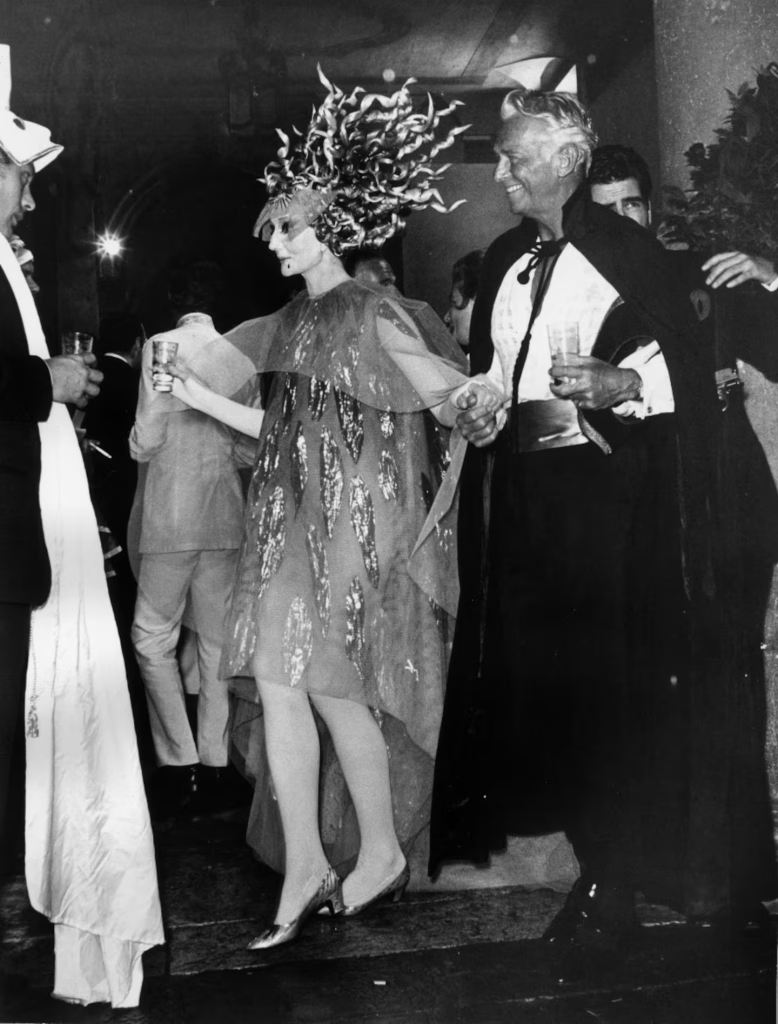
At costume balls where most people disappear into the theme she experimented. Tested proportions. Trained her eye. Those nights were less about performance and more about research.
A muse, but also an author
Saint Laurent, Ungaro, Valentino didn’t see her as a decorative presence. They treated her like a resource. Someone with a sharper sense of proportion than many inside the industry.
At 53, she launched her own line. A clean, unfussy move. Fluid silhouettes, controlled lines, an aesthetic discipline that contrasted with the excess of the ’80s. She was modern without chasing modernity.
Elegance stripped down to its essentials
Her style relied on clarity: black, navy, structured draping, vertical lines. Nothing performative. Everything intentional. Her presence felt cool, but not distant more analysis than ornament.
In today’s visually saturated culture, that type of elegance feels almost radical.
De Ribes as study material, not nostalgia
The Met’s 2015 exhibition didn’t function as tribute, but confirmation. Jacqueline de Ribes remains a valuable reference for anyone studying how women build visual identity in fashion. A lesson in control, structure, proportion.

Her legacy doesn’t need myth. It needs attention.
She understood something the industry often forgets: elegance isn’t spectacle, it’s construction. And once the structure is set, it doesn’t age.


