


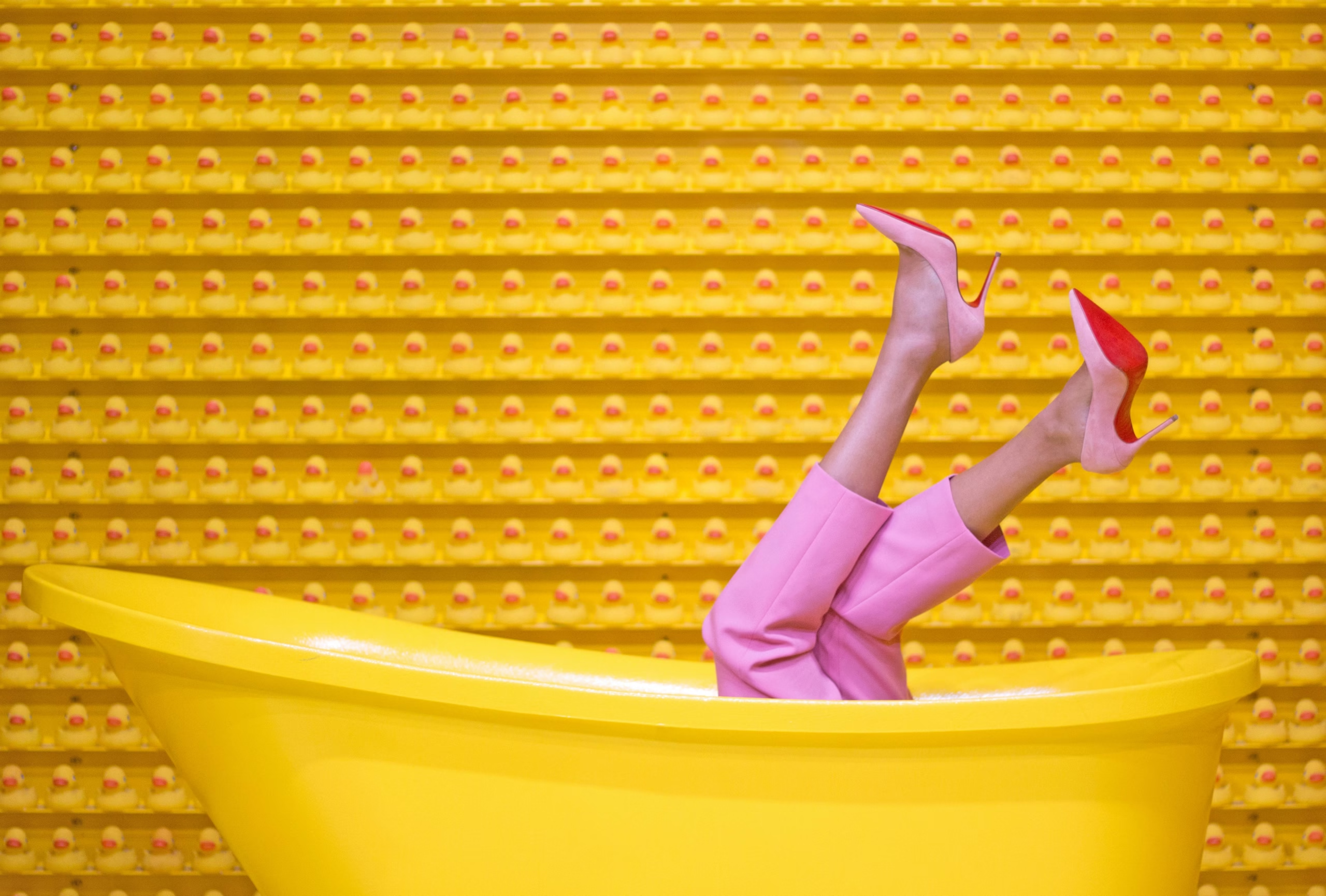
There they were, abandoned like relics of a forgotten era — a pair of glinting stilettos wedged under a café table, their satin scuffed, their aura faded. Meanwhile, across the sidewalk, someone shuffled by in butter-soft slides, latte in hand, entirely unbothered.
Once a towering symbol of sex appeal, power, and elegance, the high heel is facing a slow, painful reckoning. Somewhere between pandemic sweats and post-pandemic sneakers, the stiletto has found itself awkwardly wobbling into irrelevance — or reinvention. Welcome to the identity crisis of the high heel.
High Heels: A Short but Sharp History Lesson
Heels didn’t always belong to the ladies. In the 1600s, Louis XIV flaunted red-heeled shoes as a power flex, towering (figuratively and literally) over his courtiers. Fast forward to 1947, when Dior’s New Look re-feminized the heel: a cinched waist, a voluminous skirt, and delicate pumps signaling the return to glamour after wartime austerity.
By the 1980s, heels became synonymous with boardroom ambition — sharp pumps marched alongside power suits. Then came the 2000s, when Carrie Bradshaw turned Manolo Blahnik into a household name, and a closet full of Louboutins meant you had made it.
The Pandemic: A (Literal) Heel Turn
Cue 2020: the year sweatsuits became status symbols and fuzzy slippers outperformed Jimmy Choos. Home offices had no dress codes, and after months without the ritual of strapping into 4-inch stilettos, people realized… they didn’t miss them.
Sales data backed it up: luxury heel purchases plummeted while sneakers and orthopedic sandals (yes, Birkenstocks) soared. Fashion historians note that comfort had quietly morphed into a new form of luxury — cashmere loungewear and ergonomic footwear whispering, “I have nothing to prove.”
Comfort Couture: Sneakers, Slides, and Flats Take Over
Today’s luxury is spelled P-A-D-D-I-N-G. Think Bottega Veneta’s quilted sandals, The Row’s impossibly chic flats, and Chanel’s new-gen ballet flats sliding onto every editor’s wish list. And sneakers? They’ve not only survived — they’ve conquered. From Wales Bonner’s cult Adidas Sambas to Jacquemus x Nike linkups, sneakers now grace Fashion Week front rows with unapologetic dominance.
High fashion isn’t ignoring the shift — it’s embracing it, cushioning every step.
“The high heel isn’t dying — it’s evolving. In a world where comfort is power, walking tall no longer requires a stiletto.”
Heel Reinvention: Surrealism, Platforms, and Tech
But don’t call it a comeback — call it a reinvention. Some brands have refused to let heels quietly fade.
Enter surrealist heels: Loewe’s balloon and cracked-egg stilettos, Schiaparelli’s golden toe sculptures, and Versace’s sky-high platform pumps that channel Studio 54 glam without (allegedly) the blisters.
Meanwhile, tech innovations — hidden arch support, ergonomic insoles — are attempting to rescue the stiletto’s reputation. Even microtrends are offering an olive branch: kitten heels, mesh mules, and airy Lucite heels are redefining what a “comfortable heel” could mean.
It’s Not Just Fashion — It’s Psychology
Heels are psychological armor. Studies show women often report feeling more confident and attractive when wearing heels, yet also, paradoxically, more constrained and self-conscious. There’s a growing realization that confidence shouldn’t require discomfort. Flats, once seen as “giving up,” are now seen as bold. Not wearing heels can feel more rebellious than standing atop them.
Closing: A Farewell (For Now)
Maybe the stiletto isn’t dead—just dormant, like a glamorous diva resting between acts.
Or maybe, in the age of authenticity and autonomy, we’ll look back at those teetering, ankle-snapping shoes the way we now view hoop skirts and whalebone corsets: beautiful, powerful…and mercifully obsolete.
Either way, one thing’s certain: the identity crisis of the high heel isn’t a tragedy — it’s a plot twist.


